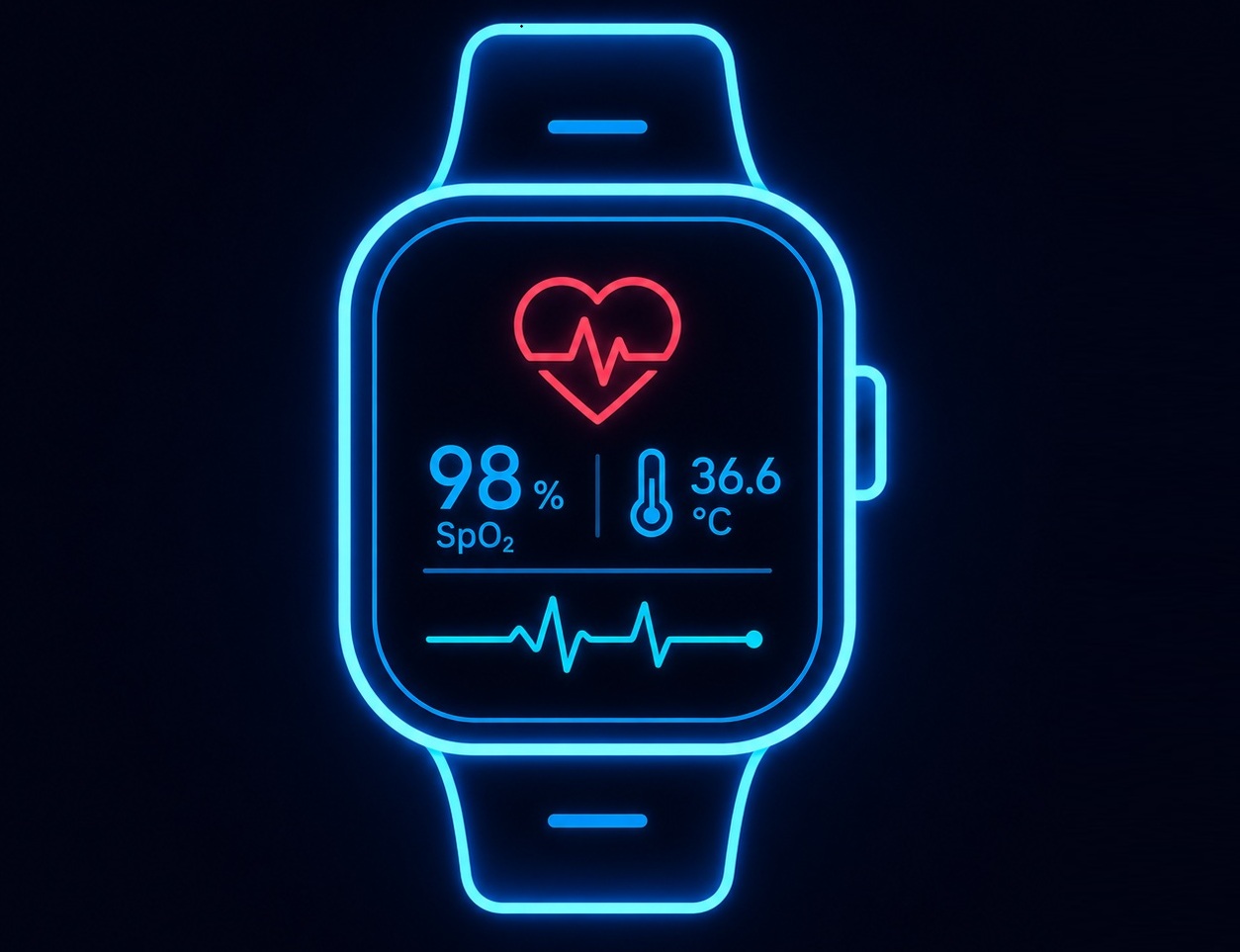
Medical Device Embedded GUI — IEC 62304-Ready, MISRA C Source

Sparklet provides the deterministic, clinically trustworthy embedded GUI framework for patient monitors, infusion pumps, diagnostic instruments, and ECG displays — with MISRA C source code delivered for your IEC 62304 SOUP documentation.

What Embedded GUI Is Used in Medical Devices?

Medical device embedded GUI refers to the display interface software running on patient monitors, infusion pumps, diagnostic equipment, ECG/EEG analysers, surgical navigation displays, and portable diagnostic devices — systems governed by IEC 62304 (medical device software lifecycle) and, for safety-classified software, requiring MISRA C compliance as a prerequisite for Class B and Class C qualification. Unlike consumer display interfaces, medical device GUI must deliver deterministic rendering, high-contrast colour schemes for clinical readability, glove and stylus touch support, and a documented software lineage suitable for regulatory audit.

Sparklet satisfies these requirements as a software component. Written in pure C to MISRA C guidelines, with no dynamic memory allocation and a predictable single-thread execution model, Sparklet produces consistent frame output at the configured refresh rate regardless of data update frequency. Full C source code is delivered to customers under the commercial licence, providing the SOUP documentation package required by IEC 62304 Section 8.1.2 for Class B and Class C medical software integration.

Below: the medical device application categories Sparklet supports, the technical properties that address IEC 62304 integration, and live hardware demos on STM32 platforms.

Medical Device Display Applications

Sparklet covers the full range of medical HMI use cases — from bedside monitors to portable diagnostic wearables.
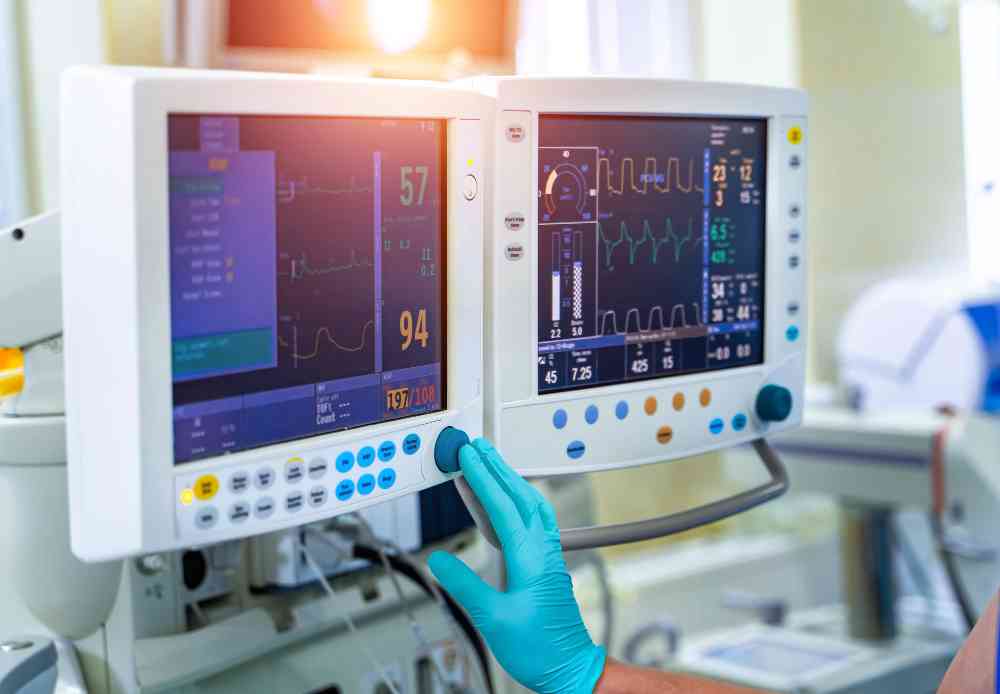
Medical Device GUI — Sparklet Technical Depth

IEC 62304 Compliance Context

IEC 62304 requires medical device software to be developed under a documented software lifecycle process, with third-party SOUP components (Software of Unknown Provenance) documented under Section 8.1.2. Sparklet satisfies the SOUP documentation requirements: Embien delivers version history, a known anomaly list, and integration guidance with every commercial licence. The MISRA C compliant source code is delivered in full, providing the coding standard evidence required for Class B and Class C software stacks. Sparklet is a software component — the device manufacturer owns their IEC 62304 lifecycle documentation, risk management per ISO 14971, and regulatory submission.

Ultra-Low Memory

Medical devices at Class IIa and below often use cost-optimised STM32F4 or STM32H7 MCUs with limited RAM budgets. Sparklet's 16 KB minimum footprint and dirty-region rendering model enable responsive UI on devices where the display stack must coexist with real-time data acquisition firmware in under 256 KB total RAM. No heap usage means RAM consumption is deterministic at design time — a property that simplifies IEC 62304 software architecture documentation. Partial framebuffer rendering mode (where Sparklet renders in bands rather than requiring a full-screen framebuffer) further reduces RAM at the cost of reduced frame rate — configurable to match device constraints. Memory optimisation techniques →

Touch & Display Requirements

Clinical environments require display interfaces that work under gloves, stylus input, and through protective screen films — conditions that consumer touch calibration cannot reliably handle. Sparklet's touch HAL is configurable: contact threshold, minimum touch area, debounce timing, and multi-touch point count are all BSP-level parameters. High-contrast colour schemes for OR and ICU environments (WCAG-aligned contrast, alarm colour coding: red/amber/green, night mode) are data-driven in Flint Designer — configurable without C code changes. Physical hardware button integration is supported via the external key API for sealed enclosure designs. Flint Designer clinical UI tools →

Recommended Platforms for Medical Device GUI Development

Platform selection for medical device display depends on screen resolution, processing budget, and the need for hardware graphics acceleration:

STM32H7 (STM32H743/H750). The most common platform for Class IIa medical monitors and infusion pumps in the 320×240 to 800×480 resolution range. DMA2D (Chrom-ART) hardware acceleration offloads pixel fill and blending, enabling smooth animations within a 200 KB RAM budget. Sparklet's STM32 BSP integrates with STM32CubeH7 FreeRTOS configurations. See the infusion pump and blood pressure demos below.

NXP i.MX RT1170. Crossover MCU with dual-core Cortex-M7/M4 and PXP 2D graphics accelerator. Suitable for mid-complexity diagnostic panels at 1024×600 resolution with multi-channel touch input. Sparklet's PXP integration enables hardware compositing of live waveforms over background panels at 60 fps. Typical RAM budget: 64–128 KB for the Sparklet layer.

NXP i.MX 8 (i.MX 8M Plus / i.MX 8QuadXPlus). MPU-class processor for diagnostic imaging workstations, multi-channel patient data displays, and point-of-care diagnostic terminals running embedded Linux. Sparklet's Linux/OpenGL ES rendering path enables 3D visualisation (organ models, scan overlays) alongside 2D clinical data panels on a shared display.

All three platforms ship with evaluation kits available through the Sparklet evaluation programme. Contact Embien to discuss your display resolution, touch interface, and connectivity requirements before selecting a platform.

Infusion Pump Demo Using Sparklet on STM32

This demo presents a modern and intuitive user interface for an Infusion Pump, developed using Sparklet and running on an STM32 microcontroller. It showcases real-time status display, dosage control, alert notifications, and smooth touchscreen interactions — all optimised for the constraints of medical-grade embedded systems. Sparklet's lightweight graphics engine ensures responsive performance, low memory usage, and high visual clarity, making it ideal for critical healthcare devices like infusion pumps.

Blood Pressure Monitoring System Demo Using Sparklet on STM32

This demo showcases a modern medical device UI for a blood pressure monitoring system, built using Sparklet, a powerful GUI engine for medical devices. Designed for clarity and ease of use, the interface provides real-time readings, intuitive navigation, and user-centric controls, ideal for both clinical and home use. Sparklet's optimised rendering engine ensures smooth performance on resource-limited hardware while supporting high standards in medical device UX design. With a focus on usability, reliability, and compliance, Sparklet simplifies development and enhances the user experience in vital health monitoring equipment.

Medical Device GUI Requirements — Sparklet Capabilities

RequirementIEC 62304 / Clinical ContextSparklet Capability
MISRA C SourceClass B/C SOUP coding standard evidenceFull MISRA C compliant C source delivered with commercial licence
SOUP DocumentationIEC 62304 §8.1.2 — version, anomalies, integration guideSOUP package delivered: version history, known anomaly list, integration notes
Deterministic RenderingWaveform display jitter has clinical implicationsFixed pipeline, no dynamic allocation — frame bounded by refresh cycle
No Dynamic MemoryPredictable RAM usage for IEC 62304 architecture documentationNo heap, no malloc — all allocations static at compile time
Long-Term SupportMedical product lifetimes: 7–15 yearsFull C source + direct-to-engineer support; no binary dependency
Multi-LanguageGlobal device variants from single firmwareUnicode engine: Latin, Cyrillic, CJK, Arabic RTL — runtime language switch
Clinical Colour ContrastAlarm coding (red/amber/green), OR night mode, WCAG contrastData-driven colour scheme in Flint Designer — no code change required
Glove Touch SupportGloved operation in clinical environmentsConfigurable touch threshold, debounce, and minimum contact area in BSP HAL

Important: Sparklet Is a Software Component — Not a Certified Medical Device

Sparklet is a display software component. It is not a certified medical device, and Embien does not make claims of IEC 62304 Class B or Class C certification for Sparklet itself. The responsibility for system-level medical device software compliance — including IEC 62304 lifecycle documentation, risk management per ISO 14971, and regulatory submission — rests with the device manufacturer.

What Embien provides: MISRA C compliant C source code, a SOUP documentation package (version history, known anomaly list, integration guide), and engineering support for integration into the customer's software development lifecycle. These inputs reduce the effort of the customer's compliance case — they do not replace it.

For detailed scope and guidance on using Sparklet within a IEC 62304-governed programme, see the IEC 62304 medical GUI guidance page. For broader safety-critical HMI context, see safety-critical HMI.

Frequently Asked Questions — Medical Device Embedded GUI

Medical device embedded GUI uses purpose-built C libraries that run on STM32, NXP i.MX RT, or similar MCUs — with deterministic rendering, no dynamic memory allocation, and MISRA C compliance as key requirements for IEC 62304 Class B/C software integration. Sparklet satisfies these requirements and is deployed in infusion pump, patient monitor, and diagnostic instrument UI programmes. Full C source is delivered under the commercial licence to support SOUP documentation requirements.

Evaluate Sparklet for Your Medical Device Programme

Download the evaluation binary for STM32H7 or NXP i.MX RT1170, explore infusion pump and patient monitor sample projects in Flint UI Designer, and discuss IEC 62304 SOUP documentation requirements with Embien's engineers.