Smart Home Automation Embedded GUI — Thermostats, Panels & Appliances

Build consumer-quality smart home interfaces with Sparklet — royalty-free per-developer-seat licensing, smooth animations on cost-sensitive IoT MCUs, and multi-language support for global product lines. From smart thermostats to security panels.

What Is Smart Home Automation Embedded GUI?

Smart home automation embedded GUI is the display interface software running on smart thermostats, security and access control panels, smart lighting controllers, HVAC controllers, home energy monitors, and appliance control surfaces — products where consumer-grade visual quality, smooth touch interaction, and royalty-free licensing at IoT volume are all equally critical. Unlike industrial HMI screens, smart home displays are judged by end-consumers against smartphone and tablet standards: animations must be smooth, colour schemes must be modern, and touch response must feel instant.

Sparklet is purpose-built to meet this bar on cost-sensitive IoT MCUs. A minimum 16 KB RAM footprint fits the STM32F4, Nuvoton, and Renesas RA-series processors that dominate smart home product BOMs. Flint UI Designer enables product designers — not only embedded engineers — to create pixel-perfect layouts, define animation sequences, and prototype interaction flows without writing C. Single-click export generates optimised C code ready for MCU integration. The royalty-free per-developer-seat licensing model means a smart home OEM shipping 500,000 thermostats per year pays no incremental per-unit fee for the display stack.

The five application categories below cover the primary smart home surface types, followed by live hardware demos running on STM32 and Renesas RA8D1.

Smart Home Application Categories

Sparklet covers the full range of connected home display surfaces — from compact thermostat panels to feature-rich security interfaces.

Smart Home GUI Capabilities

Touch Interface Design

Smart home products live or die on the first touch. Sparklet's animation engine supports CSS-style easing curves, multi-object parallel animations, and per-widget transition effects that give thermostats and lighting panels the fluid, consumer-grade feel that drives product reviews. Flint UI Designer previews all animations in real time on the PC simulator — before any hardware is connected. Slider, RotaryKnob, and SwipeButton widgets cover every touch control pattern found in smart home HMI without custom widget coding.

Multi-Language Support

Smart home products ship globally under manufacturer and private-label brand names. Sparklet's Unicode engine with Flint-generated font atlases supports 40+ language scripts from a single codebase, with runtime language switching. This eliminates the need for separate firmware builds per language region. Latin, Cyrillic, Chinese, Japanese, Korean, and Arabic RTL are all supported. Selective glyph inclusion keeps Flash footprint minimal on MCU targets.

Low-Power Display Management

Battery-backed smart home devices — wireless thermostats, door sensors, portable remotes — require aggressive display duty-cycling. Sparklet's display management API blanks the display and signals the MCU power management layer to reduce clock speed between interaction events. Combined with dirty-region rendering that only redraws changed areas, power consumption during active display periods is also minimised. One consumer electronics customer achieved 60% memory reduction and 25% longer battery life using these Sparklet techniques.

Platform Migration Without UI Rework

Smart home product families often span multiple MCU generations. Sparklet's HAL layer separates platform-specific LCD timing and DMA configuration from widget and screen logic. Porting from STM32F4 to STM32H7, or from STM32 to Nuvoton, requires updating the BSP only. All screen layouts, animations, and state machines from Flint export unchanged. This is critical for product families that share one UI design across cost and feature tiers.

Sparklet Smart Home Demos — Live on STM32 and Renesas RA8D1

The demos below run on production-representative embedded hardware, demonstrating Sparklet's consumer-quality rendering, smooth animations, and intuitive touch interaction across real smart home application scenarios. All demos were built using the Flint UI Designer and the standard Sparklet widget library — no custom rendering code was written for any of the demo screens.

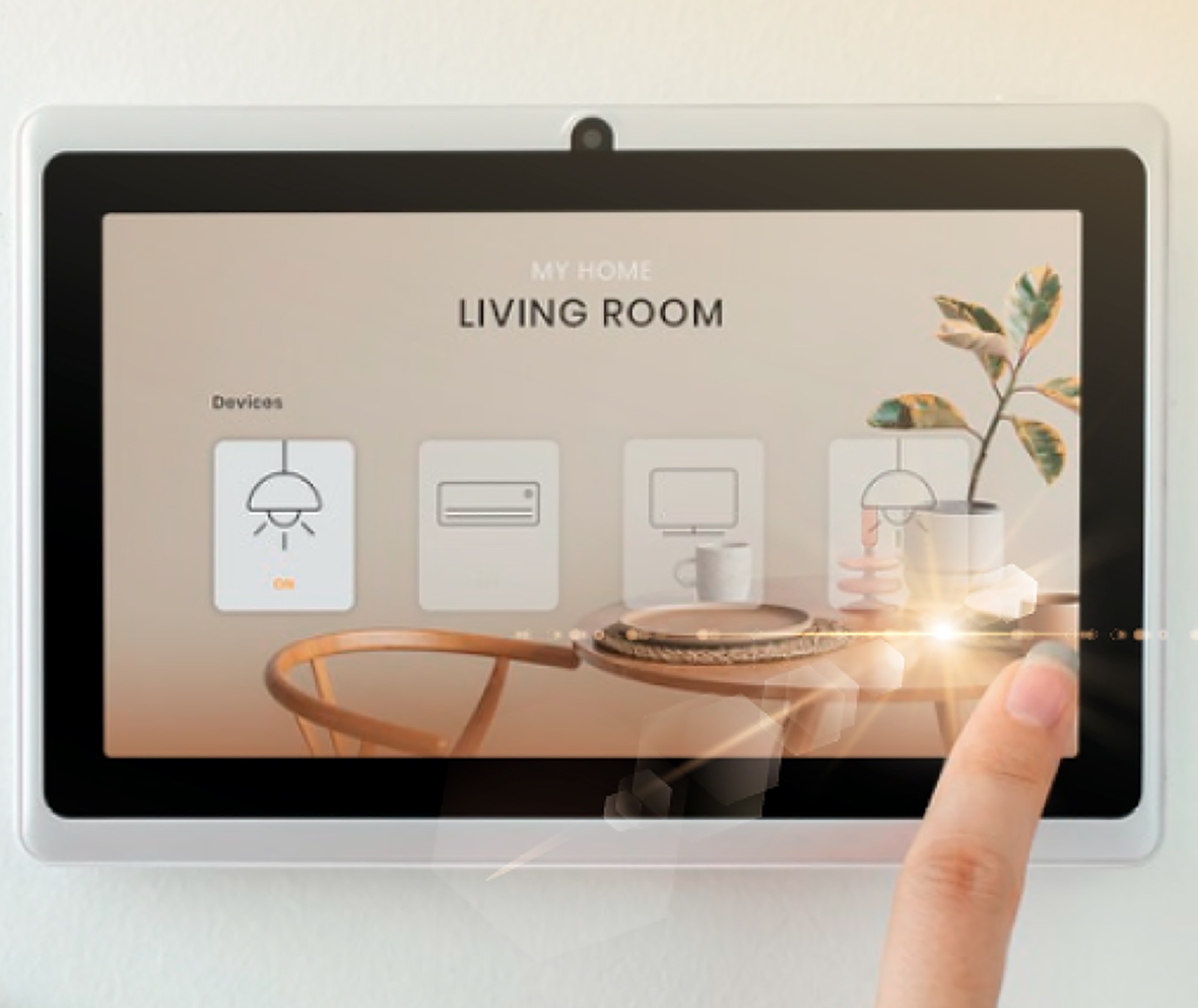
Smart Lighting Control Panel Demo using Sparklet on STM32

Discover the Smart Lighting Control Panels demo powered by Sparklet on STM32. Easily adjust brightness, color, and modes with an intuitive touch interface. Real-time feedback and smooth transitions enhance user experience. Sparklet's lightweight GUI engine ensures optimal performance on embedded hardware. Ideal for smart home and building automation systems.

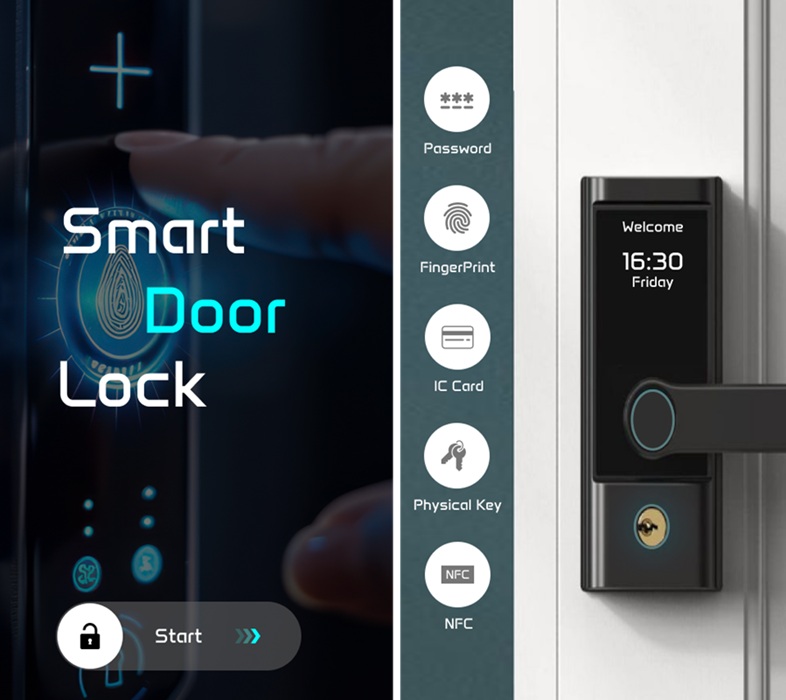
Smart Door Locks Demo Using Sparklet on the Renesas RA8D1

Explore the Smart Door Locks demo built with Sparklet on the Renesas RA8D1 platform. The interface offers secure access control with intuitive touch interactions. Real-time lock status, keypad input, and alerts are seamlessly integrated. Sparklet ensures smooth performance on resource-constrained embedded systems. Perfect for next-gen smart security solutions with sleek, responsive UI.

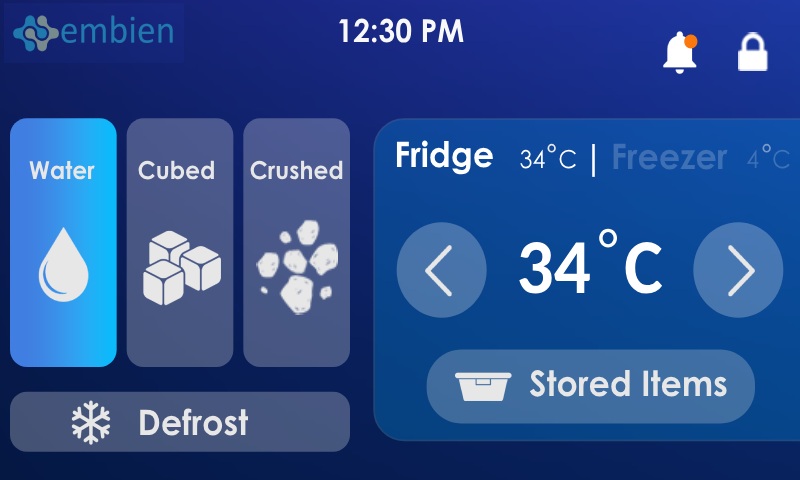
Smart Thermostat HMI Demo using Sparklet on STM32

Sparklet embedded graphics library for smart home devices empowers developers to create intuitive and responsive thermostat HMIs with minimal effort. Optimised for STM32 platforms, Sparklet ensures high-performance rendering, smooth integration, and scalable design — ideal for modern smart home automation systems. Whether you're building a simple control panel or a feature-rich interface, Sparklet accelerates development with its low-code approach and flexible architecture. This makes it easy to adapt to changing design needs and deliver engaging user experiences across a variety of STM32-based home automation applications. Experience our smart thermostat GUI demo to see how Sparklet brings efficiency, performance, and versatility to embedded HMI development.

Sparklet Smart Home Platform Guide

Device TypeTypical MCUDisplay ResolutionApprox. RAM BudgetKey Sparklet Capability
Smart ThermostatSTM32F4 / Nuvoton320×240 to 480×27216–32 KBLow-power sleep API, Clock & Carousel widgets
Security PanelSTM32H7 / Renesas RA800×48032–64 KBMulti-user state machine, high-contrast mode
Lighting ControllerSTM32F4 / Nuvoton320×24016–32 KBSlider, RotaryKnob, animated colour preview
Appliance SurfaceSTM32F4 / STM32H7480×272 to 800×48032–64 KB36+ widget library, DMA2D acceleration
Energy MonitorSTM32H7 / NXP RT1170800×480 to 1024×60064–128 KBGraph + ProgressBar, multi-language, runtime data

Why Smart Home OEMs Choose Sparklet

Smart home products face a unique combination of pressures that separates GUI library selection from industrial or automotive decisions. Sparklet is designed to satisfy all three simultaneously: consumer visual quality, development speed, and royalty economics at volume.

Royalty-Free Licensing at IoT Volume. A thermostat OEM shipping 200,000 units annually cannot absorb a per-unit GUI royalty without it materialising as a meaningful margin hit. Sparklet's developer-seat licensing eliminates this entirely — the cost is fixed regardless of production volume. This is one of the most cited reasons smart home and appliance OEMs choose Sparklet over frameworks with per-unit or per-device licensing. See Sparklet features for full licensing context.

Consumer Aesthetic Expectations. End-consumers compare smart home touchscreens to their smartphones. Sparklet's animation engine supports CSS-style easing curves, multi-object parallel animations, and per-widget transition effects — giving thermostats and lighting panels the fluid feel that drives product reviews. Flint UI Designer previews animations in real time on the PC simulator before any hardware is connected.

Platform Migration Without UI Rework. Smart home product families often span multiple MCU generations. Sparklet's HAL layer separates platform-specific LCD timing and DMA configuration from widget and screen logic. Porting from STM32F4 to STM32H7 — or from STM32 to Nuvoton — requires updating the BSP only. All screen layouts, animations, and state machines from Flint export unchanged.

For related building automation applications — commercial HVAC controllers, BMS room panels — see building automation HMI. For appliance surface GUIs — washing machines, refrigerators, coffee makers — see consumer electronics embedded GUI.

Frequently Asked Questions — Smart Home Automation Embedded GUI

Smart home automation devices use embedded GUI libraries that run on cost-optimised 32-bit MCUs — STM32, Nuvoton, Renesas RA-series — with display resolutions from 320×240 (thermostat) to 1024×600 (energy management hub). Sparklet is purpose-built for this segment: 16 KB minimum RAM, consumer-quality animation engine, royalty-free per-developer-seat licensing, and Flint UI Designer for rapid consumer UI iteration. It supports FreeRTOS, bare metal, and Azure RTOS execution environments.

Evaluate Sparklet for Your Smart Home Product

Download the evaluation binary for STM32, Renesas RA, or Nuvoton platforms. Includes Flint UI Designer, smart thermostat and lighting control sample projects, and direct access to Embien's engineers for integration and licensing questions.