High-performance, safety-aware embedded GUI for the cockpit of tomorrow. Trusted by leading OEMs and Tier 1 suppliers — Tata Motors, Ashok Leyland, Veethree, Pricol — to power digital instrument clusters, infotainment systems, and heads-up displays.
Automotive HMI embedded GUI refers to the display software layer that renders instrument clusters, infotainment screens, heads-up displays (HUDs), and ADAS camera overlays inside a vehicle — systems that must meet automotive-grade reliability, deterministic frame timing, and increasingly, functional safety requirements under ISO 26262. Unlike general-purpose GUI frameworks, an automotive-grade embedded GUI must run on bare metal or real-time OS without dynamic memory allocation, be portable across silicon vendors (Renesas, NXP, Infineon), and deliver consistent frame rates from cold boot.
Sparklet is the embedded-native answer. Written in pure C with MISRA C compliant source code delivered for customer audit, Sparklet has been deployed in production automotive programmes by Tier 1 suppliers across India's commercial vehicle, two-wheeler, and passenger car segments. Its 7-layer architecture separates the HAL from the widget layer, making platform migration a BSP-level change without touching application code. Flint UI Designer generates optimised C code, enabling UI/UX designers and embedded engineers to work in parallel and cut development cycles by up to 70%.
Below: the six automotive display categories Sparklet addresses, followed by live hardware demos on Renesas RH850, NXP i.MX 8, NXP RT1170, and Renesas RX62N platforms.

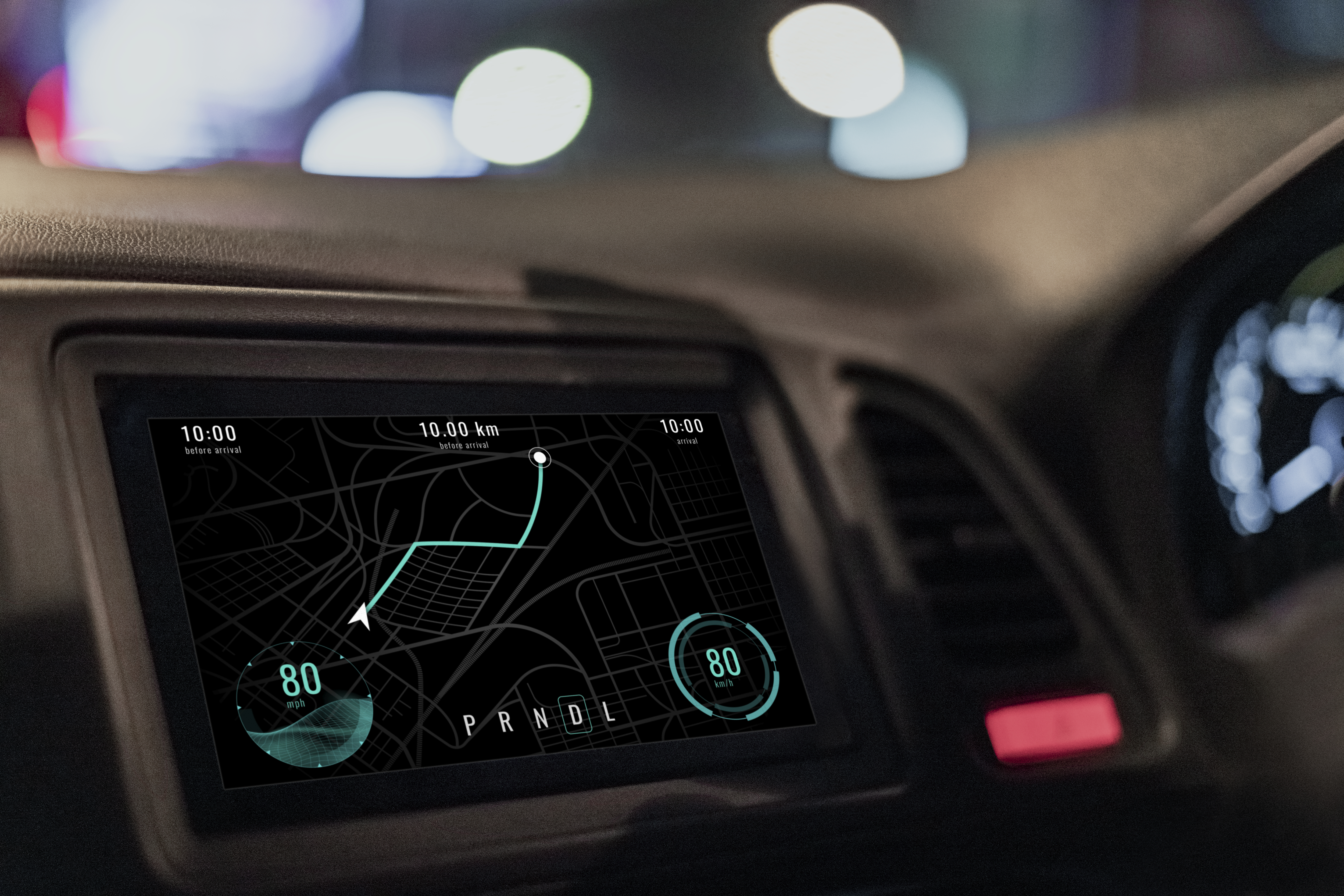
Speed, RPM, fuel, TPMS, navigation guidance, and warning icons — rendered at 60 fps on Renesas RH850 and NXP RT1170. Boot animation and turn-by-turn navigation supported.
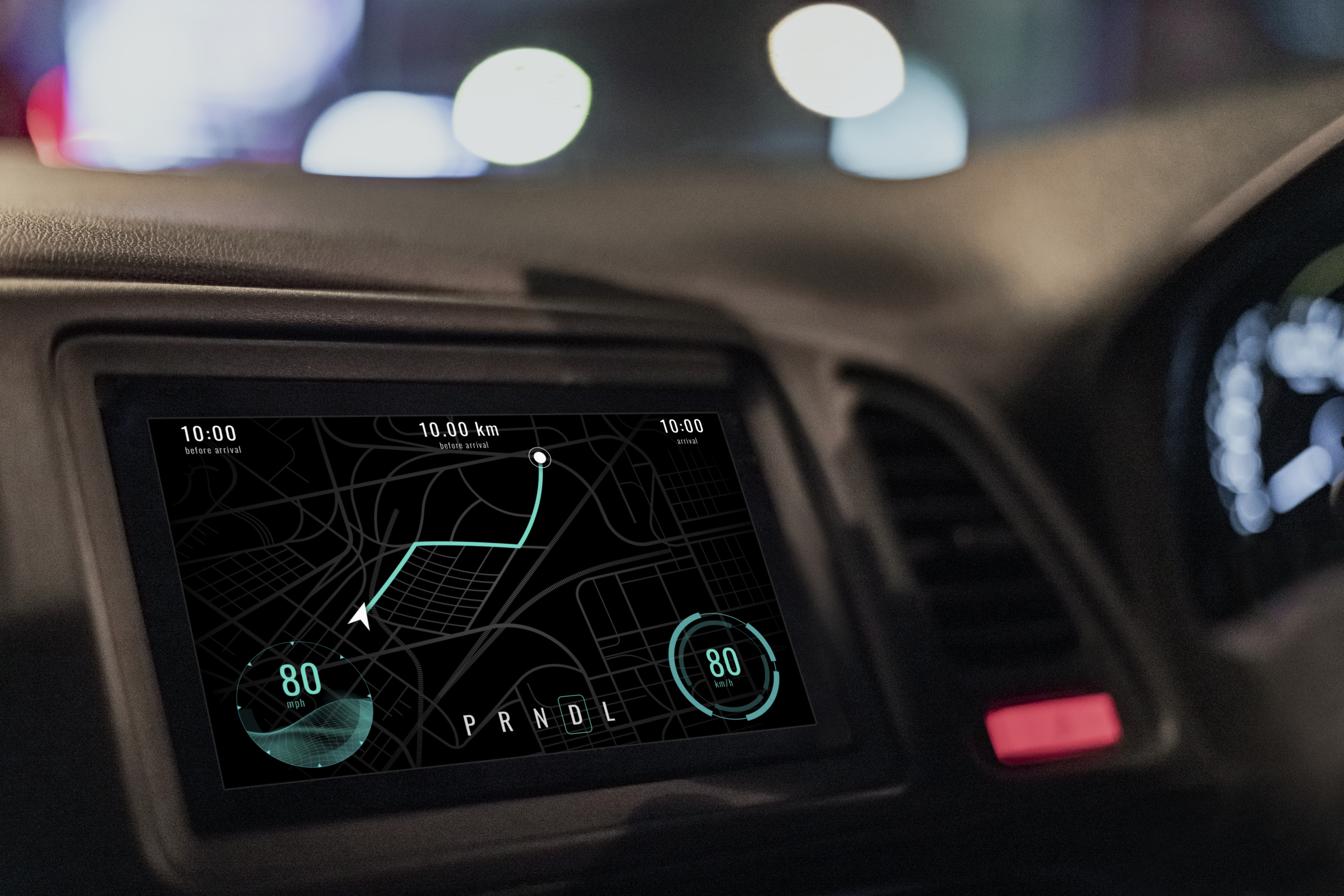
Android Auto and CarPlay screen mirroring, media controls, phone connectivity, and real-time vehicle data on NXP i.MX 8 and i.MX RT platforms.
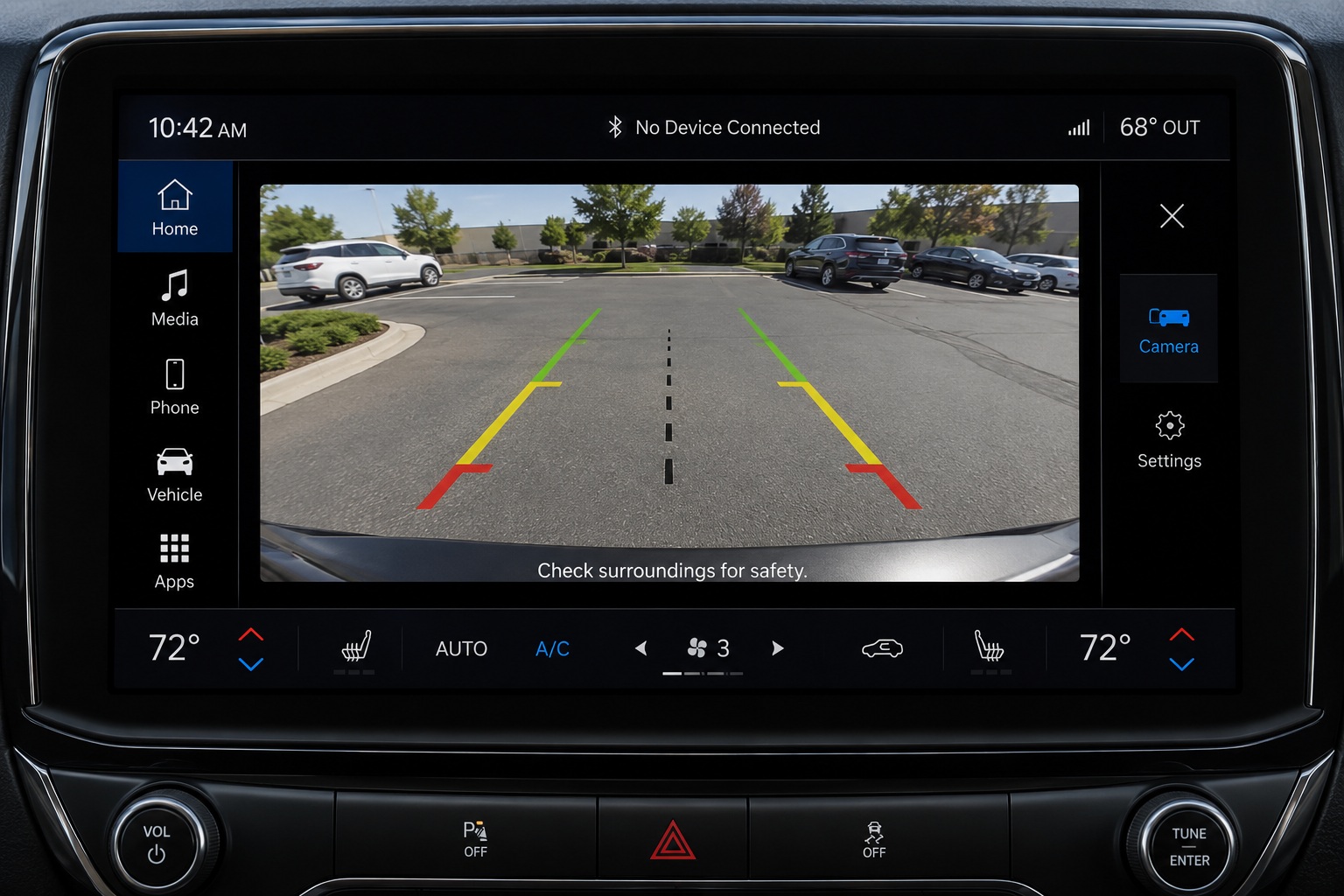
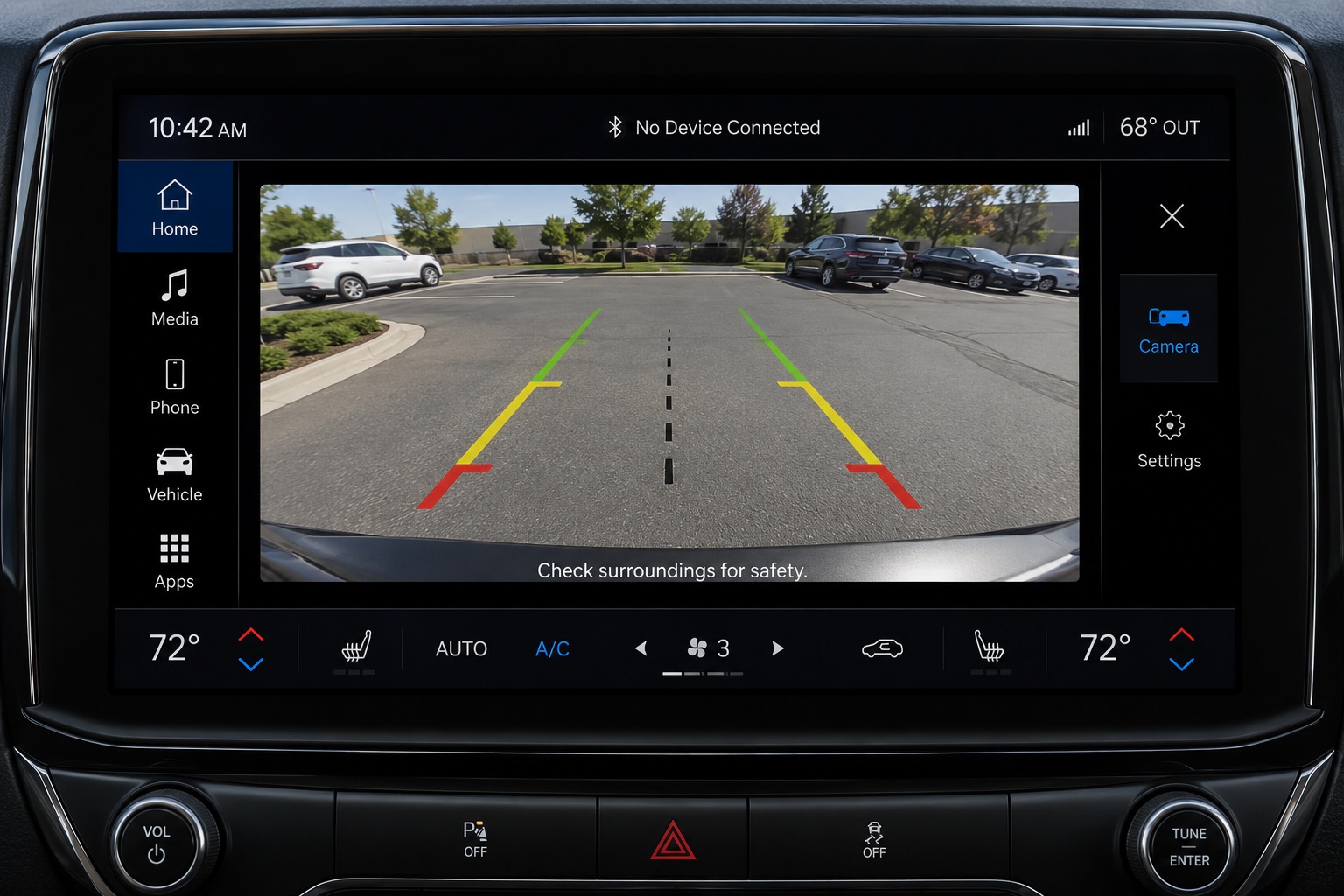
Live camera feed composited with parking grid overlays, object detection boxes, and warning icons using hardware layer composition on NXP i.MX RT1170.
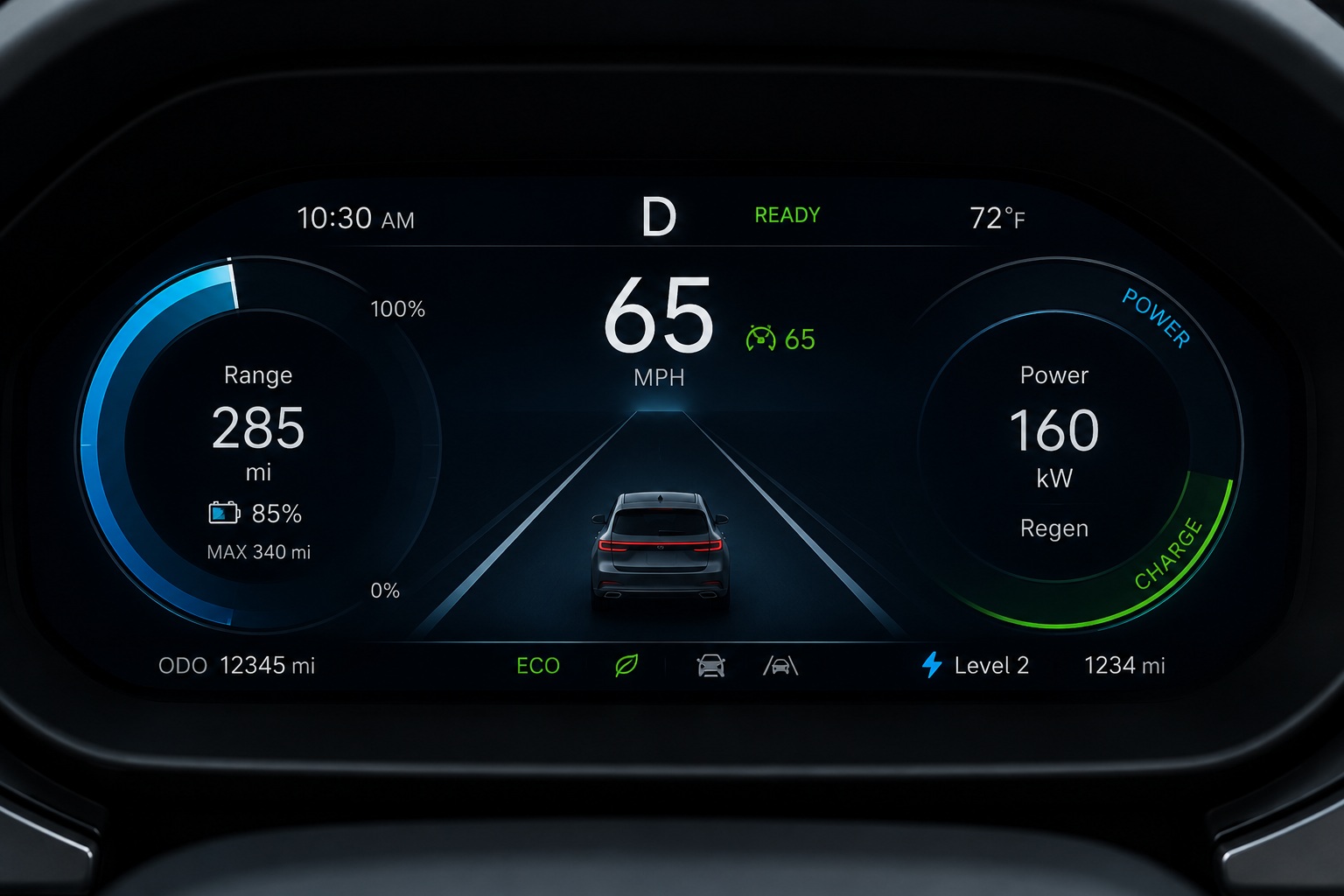
Battery state-of-charge, regenerative braking indicators, range estimation, and charging station navigation on electric two-wheelers and commercial EVs.
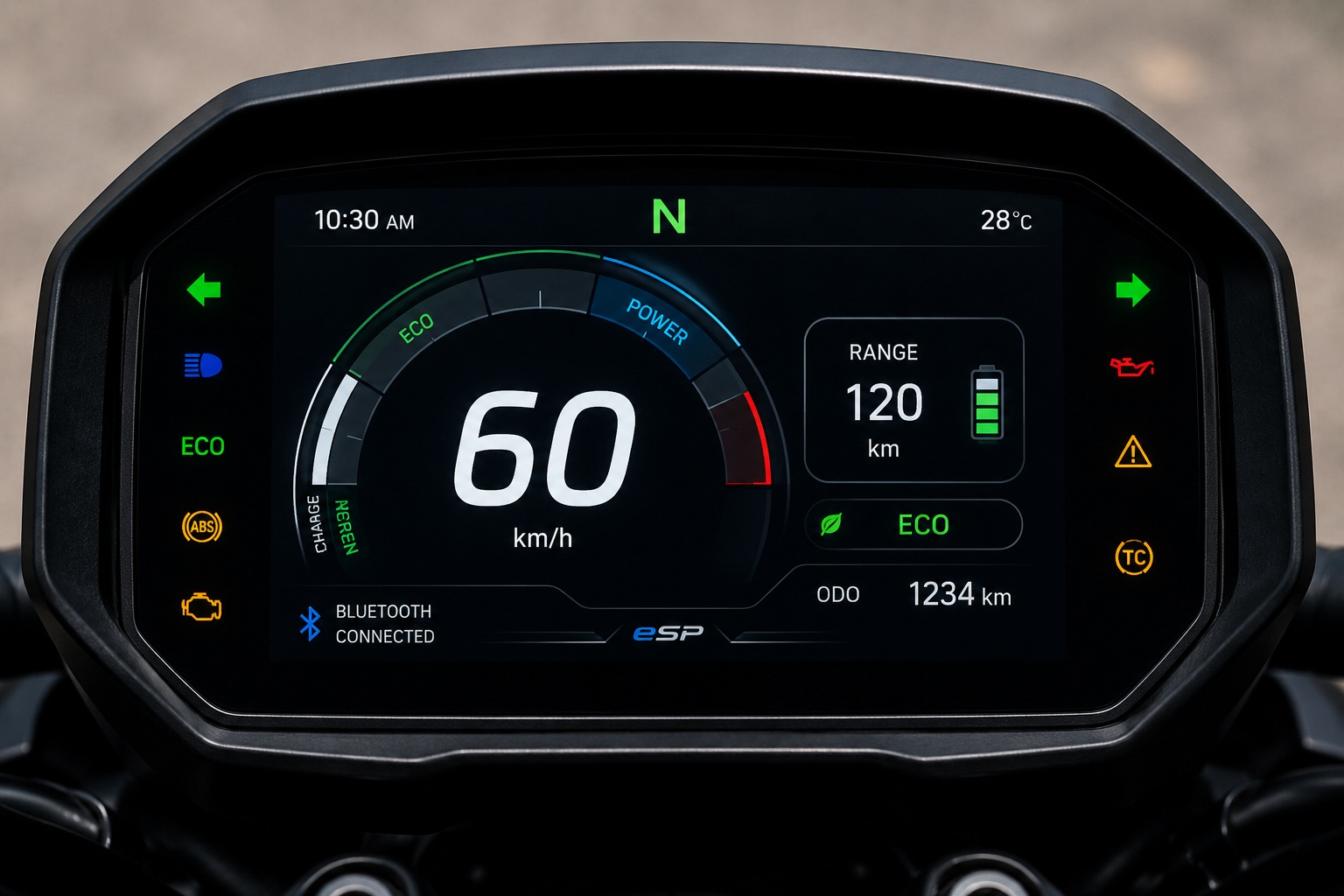
Compact instrument clusters for motorcycles and scooters. Low footprint rendering on RH850, fast boot, and glanceable gauge layouts optimised for two-wheeler ergonomics.

Compact framebuffer rendering for HUD projector optics. Low-latency compositing of speed, navigation, and ADAS alerts on resource-constrained MCUs.
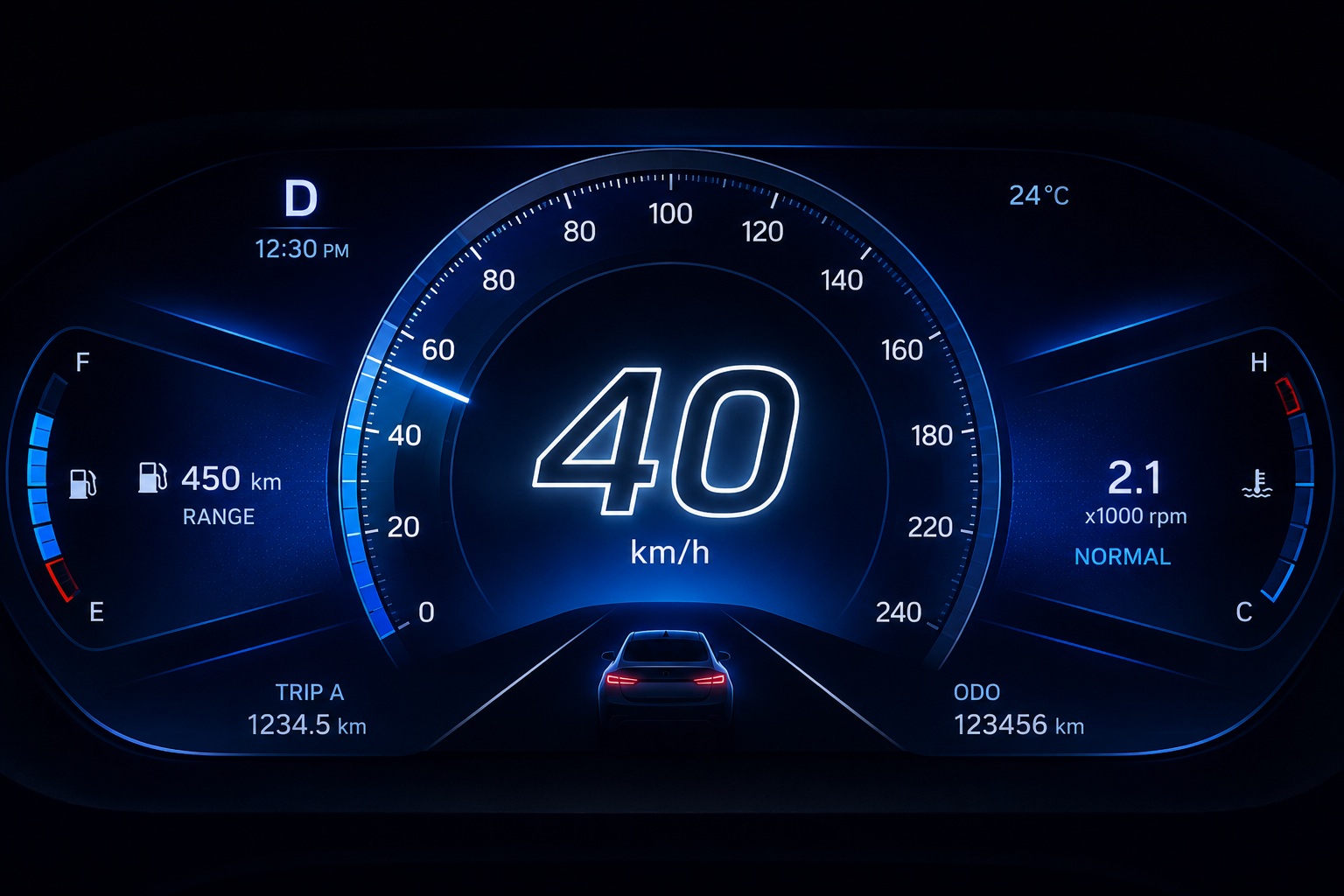
Sparklet powers digital instrument clusters from entry-level two-wheeler panels to full-featured commercial vehicle dashboards. On Renesas RH850 D1M1A, the D/AVE2D 2D accelerator handles gauge rotation, pointer animation, and alpha blending — all at 60 fps. The Flint UI Designer includes pre-built cluster widgets: analog gauge, digital speedometer, fuel and temperature arcs, gear indicator, and warning icon grid. State machine editor handles screen transitions (e.g. startup animation → normal drive → warning mode) visually without C code.

On NXP i.MX 8 MPUs, Sparklet's Linux rendering path enables full IVI experiences: Android Auto and CarPlay screen mirroring, Sparklet-rendered vehicle data panels, media player UI, navigation maps, and multi-zone display compositing — all on the same screen simultaneously. The architecture separates the mirroring stream from native Sparklet-rendered panels, enabling both to coexist without interference. Hardware-accelerated compositing via the Mali GPU keeps the compositor frame rate independent of application data update rates.

ADAS displays require sub-20 ms end-to-end latency from camera frame capture to overlay rendering on screen — a requirement that generic frameworks cannot meet without hardware layer composition. On NXP i.MX RT1170, Sparklet uses the PXP hardware pipeline to composite Sparklet-rendered overlay graphics (parking grid, object bounding boxes, distance markers) over the live camera feed in hardware — without CPU involvement in pixel blending. The result is camera frame timing that is decoupled from the GUI rendering cycle.

The demos below run on production-representative hardware — not simulators. Each targets a different platform and display configuration, demonstrating Sparklet's consistent rendering quality and integration speed across silicon vendors.
This demo showcases a 10.25-inch automotive instrument cluster running on the eStorm-C2 platform, powered by the Renesas RH850 D1M1A processor. It features boot animations, Turn-By-Turn (TBT) navigation, call and message notifications, map mirroring, TPMS (Tire Pressure Monitoring System), and intuitive controls for contacts and music.
Experience Android Auto seamlessly running on the MAS Elettronica Kit, powered by the NXP i.MX8 processor and enhanced by the Sparklet Embedded GUI library. This demo showcases seamless navigation, media controls, phone connectivity, and real-time vehicle data integration, delivering a responsive and visually rich user experience tailored for modern automotive infotainment solutions.
This demo highlights Sparklet's integration with the NXP RT1170 microcontroller to develop advanced automotive instrument clusters. Featuring dynamic digital displays, it provides essential driver information such as speed, fuel level, navigation guidance, and vehicle diagnostics. Sparklet ensures seamless integration, smooth performance, and an enhanced user experience.
This demo showcases an advanced automotive cluster with integrated camera support, powered by the Sparklet library. It provides an intuitive interface for real-time vehicle monitoring, enhancing driver awareness and safety with seamless access to critical information.
This demo showcases the power of the Sparklet embedded GUI library in creating intuitive and visually rich instrument clusters on the Renesas RX62N. Designed for automotive applications, it highlights the seamless integration of RX62N's capabilities with Sparklet, delivering user-friendly interfaces with dynamic and engaging visuals.
Automotive GUI selection involves trade-offs that general-purpose frameworks cannot satisfy simultaneously. Sparklet was designed around the constraints that automotive engineers encounter every programme cycle:
MISRA C Compliant Source. Sparklet's source code is delivered to customers and is written to MISRA C guidelines — a prerequisite for integration into ISO 26262 ASIL-B and ASIL-D software stacks. Customers receive the full source for their compliance audit, not a binary blob. See ISO 26262 embedded GUI guidance for scope details.
Zero Per-Unit Royalty. Automotive production volumes range from tens of thousands to millions of units. Sparklet's per-developer-seat licensing means your BOM cost for the display stack is fixed — regardless of production volume. Compared to frameworks with per-unit royalty models, this translates directly to margin at scale.
Platform Portability. Sparklet's HAL separates LCD timing, DMA configuration, and GPU driver calls from application code. Migrating from RH850 to i.MX RT1170 requires updating the BSP layer only — all screen logic, widget states, and animations remain unchanged. This is critical for platform families where the same cluster design ships across vehicle lines on different MCUs.
Flint UI Designer. The WYSIWYG design tool enables automotive UX designers to build, animate, and prototype cluster screens without writing C code. State machine editor supports UML-based screen transition logic. Single-click export generates production-ready C that engineers integrate directly — reducing the design-to-code iteration cycle from weeks to hours. Learn about Flint UI Designer.
Hardware Acceleration Support. On RH850 D1M1A, Sparklet uses the D/AVE2D (DRW) 2D accelerator for blending, scaling, and rotation offload. On NXP i.MX RT1170, it uses the PXP and LCDIF hardware pipeline. On i.MX 8, OpenGL ES via the Mali GPU is available for 3D cluster graphics and digital twin visualisation. Hardware acceleration details.
A Tier 1 automotive supplier using Sparklet on a commercial vehicle cluster programme achieved a 40% faster development cycle compared to their previous GUI framework — reaching production sign-off in a single engineering programme cycle.
Automotive HMI systems use purpose-built embedded GUI libraries that run in pure C on automotive-grade MCUs and MPUs — not desktop frameworks ported to embedded. Sparklet is one such library, deployed in production by Tier 1 suppliers on Renesas RH850, NXP i.MX 8, NXP RT1170, and Renesas RX-series platforms. It provides MISRA C compliant source, deterministic rendering, and zero per-unit royalty — properties that Qt, LVGL, and general-purpose frameworks do not simultaneously satisfy at automotive production scale.
Download the evaluation binary for your target platform — RH850, NXP RT1170, i.MX 8, or others. Includes Flint UI Designer, pre-built automotive cluster sample projects, and access to Embien's engineers for integration questions.