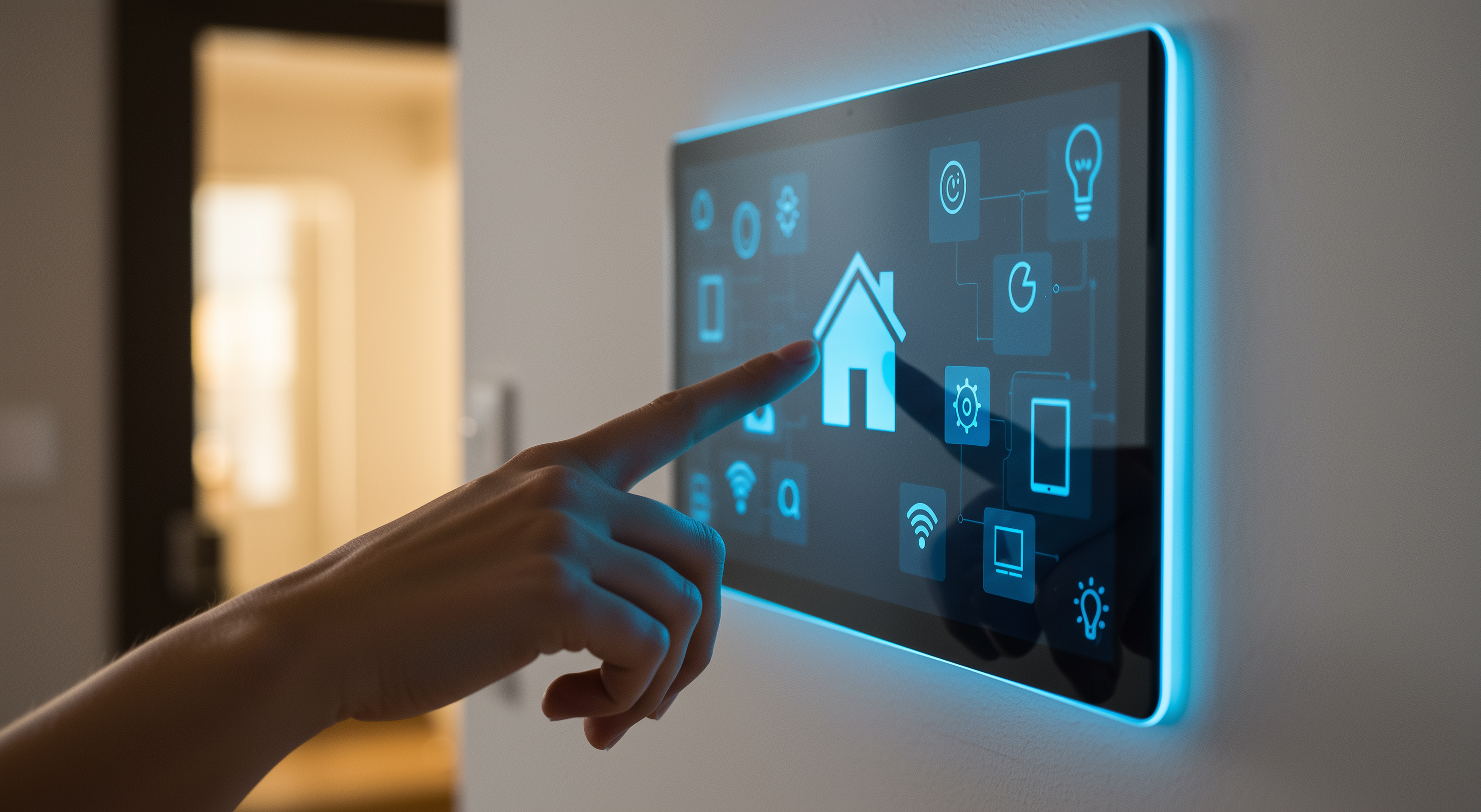
In today's connected world, users expect a rich, responsive, and intuitive graphical user interface (GUI) on every device they touch. From industrial control panels and automotive dashboards to smart home appliances and medical instruments, the demand for high-performance embedded GUIs has skyrocketed. This shift presents a significant challenge for developers: how to deliver a smartphone-like experience on hardware with constrained memory, processing power, and battery life.
For years, developers have turned to STMicroelectronics' microcontrollers (STM32) and microprocessors (STM32MP series) as the backbone for their embedded systems. These STM platforms are exceptionally popular due to their powerful performance, vast scalability, and a rich ecosystem of development tools. However, rendering a modern GUI efficiently still requires a specialized software layer.
This is where Sparklet, an advanced embedded graphics library, enters the picture. Sparklet is not a generic, ported desktop library; it is purpose-built from the ground up for efficient, high-performance GUI rendering on the very resource-constrained systems that developers of STM platforms build upon. This article explores how Sparklet unlocks the full graphics potential of STM hardware, enabling developers to create stunning UIs with minimal overhead.
Deep Integration: How Sparklet Complements STM Platforms
Sparklet is engineered to work with the hardware, not against it. Its architecture is designed for seamless integration with the powerful peripherals found in the STM32 and STM32MP series, ensuring that every CPU cycle is used efficiently.
- Direct Hardware Acceleration: Sparklet interfaces directly with STM's core graphics hardware. This includes the LTDC (LCD-TFT Display Controller) for managing display timings and layers, and the DMA (Direct Memory Access) controller. By using DMA, Sparklet can move pixel data from memory to the display controller without any CPU intervention, freeing the main processor to handle application logic, read sensors, or manage connectivity.
- Hardware Abstraction Layer (HAL): One of Sparklet's greatest strengths is its portability. It features a clean, well-defined HAL that separates the core GUI logic from the underlying hardware. This means you can develop your UI once and deploy it across a wide range of STM platforms—from a low-power STM32L4 to a high-performance STM32H7, or even up to a Linux-based STM32MP1.
- Broad OS and Bare-Metal Support: Flexibility is key in embedded GUI design. Sparklet supports a wide array of operating environments common to STM development. Whether your project uses FreeRTOS (a popular choice for STM32), Azure RTOS (ThreadX), or a full-fledged embedded Linux distribution on the STM32MP series, Sparklet provides the necessary hooks and drivers. It can even run on bare-metal for applications requiring the absolute minimum footprint and fastest boot time.
Performance and Efficiency: The Sparklet Advantage
In the embedded world, performance isn't just about speed; it's about efficiency. This means delivering a fluid user experience while consuming the fewest possible resources.
- Optimized Rendering Pipeline: Sparklet employs an intelligent rendering pipeline that minimizes redundant operations. It supports techniques like partial frame updates (dirty rectangles), redrawing only the portions of the screen that have changed. This dramatically reduces the load on the display bus and the CPU.
- Low Memory Footprint: Flash and RAM are precious resources on an MCU. Sparklet is designed to be lean, with a small code footprint. It also manages memory intelligently, allowing for efficient framebuffer strategies and asset storage, enabling rich GUIs even on devices with limited RAM.
- Fast Startup Time: For many applications, particularly in automotive and medical fields, a long boot time is unacceptable. Sparklet initializes rapidly, allowing it to render the first frame and respond to user input in milliseconds, not seconds.
- Harnessing the Chrom-ART Accelerator (DMA2D): Many STM32 microcontrollers feature the Chrom-ART Accelerator (also known as DMA2D). This powerful 2D graphics co-processor is designed to offload intensive graphics tasks from the main Cortex-M core. Sparklet is built to leverage this peripheral extensively for:
Blitting: High-speed bitmap and image rendering.
Alpha Blending: Smoothly compositing multiple layers with transparency.
Pixel Format Conversion: Instantly converting color formats without CPU load.
By offloading these tasks to the DMA2D, Sparklet ensures that complex animations, layer transitions, and image-heavy screens remain fluid and responsive, leaving the CPU free for your application's primary functions.
Real-World Use Cases and Applications on STM Platforms
The combination of STM hardware and the Sparklet library is a perfect match for a diverse range of demanding applications.
- Industrial HMI Systems: In factory automation and process control, HMI systems must be robust, responsive, and clear. Sparklet on an STM32H7 or STM32MP1 provides the power to drive responsive multi-touch interfaces, render real-time status dashboards with dynamic charts, and ensure reliable 24/7 operation.
- Automotive Instrument Clusters: The modern digital cockpit demands smooth gauge animations, crystal-clear indicators, and zero-lag responses. Sparklet's fast boot time and efficient animation engine make it ideal for automotive "telltale" displays and digital instrument clusters built on STM platforms.
- Smart Home Devices: From thermostats to kitchen appliances, smart home products compete on user experience. Sparklet enables the creation of a modern, intuitive, and visually appealing UI on cost-effective STM32G0 or STM32F4 series MCUs, giving products a critical market edge.
- Medical Displays: Reliability and clarity are non-negotiable in embedded medical instruments. Whether it's a patient monitor, an infusion pump, or a diagnostic device, Sparklet's lightweight, stable, and MISRA C-compliant (optional) design provides a dependable foundation for critical embedded display design.
Why Choose Sparklet for Your STM32 GUI Development?
While several GUI solutions exist, Sparklet offers a unique combination of benefits specifically tailored for the challenges of STM32 GUI development.
- Optimized for Embedded Design: Sparklet is built with a "zero-overhead" philosophy. Every feature is designed for high performance and minimal resource consumption, making it ideal for the embedded world.
- Easy Deployment Across STM's Range: Its powerful HAL and broad OS support (including bare-metal) make it incredibly simple to deploy and maintain your UI code across ST's entire MCU and MPU spectrum.
- Backed by Deep Industry Experience: Sparklet is a product of Embien Technologies, a company with deep, field-proven experience in automotive and industrial GUI design. This expertise is baked into the library's architecture, ensuring it is robust, reliable, and ready for demanding real-world applications.
Conclusion: Build Your Next-Generation UI with Sparklet
The demand for high-quality GUIs on embedded devices is no longer a trend; it is the standard. Building these interfaces on the powerful and flexible STM platforms requires an equally powerful and efficient embedded graphics library.
Sparklet provides the missing piece, bridging the gap between STM's hardware capabilities and the end-user's high expectations. By leveraging hardware acceleration like the Chrom-ART (DMA2D), maintaining an exceptionally low memory footprint, and offering unparalleled scalability, Sparklet empowers developers to build the next generation of efficient, beautiful, and responsive embedded UIs.
To learn more about specific device compatibility and hardware support, explore Sparklet’s Supported MCUs and MPUs documentation.
Ready to unlock the full potential of your STM hardware? Start your next embedded GUI project with Sparklet and experience unmatched efficiency and performance.
https://sparkletui.com/documentation/