
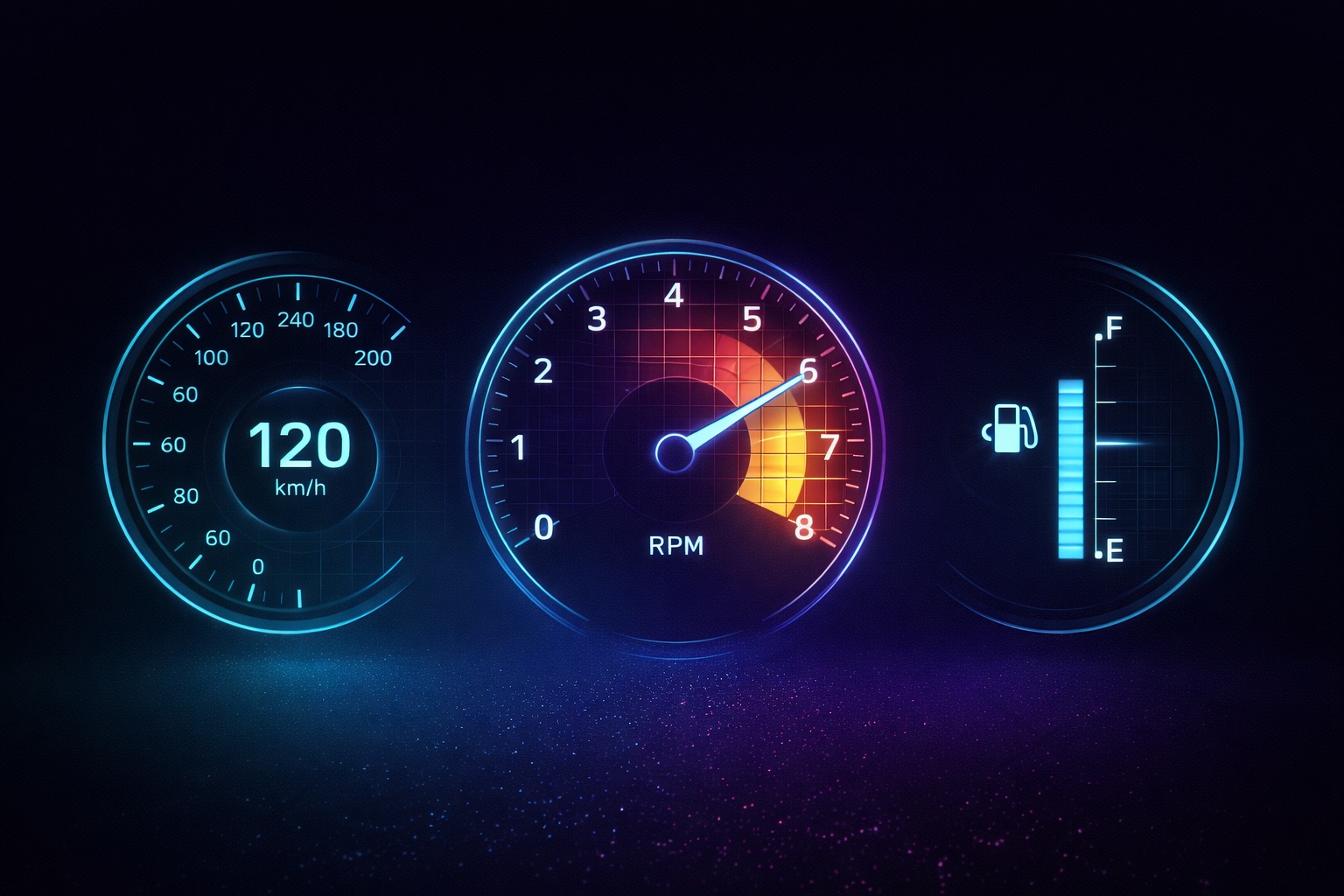
Modern embedded interfaces are becoming increasingly animation-driven. From automotive instrument clusters to smart home dashboards, smooth transitions and motion feedback improve usability and visual appeal. However, implementing animations on resource-constrained embedded systems is always a challenge.
Large frame sequences can quickly consume CPU cycles, GPU bandwidth, and memory, especially when every frame is rendered entirely. To address this, Sparklet introduces a powerful optimization feature called Dynamic Grid Tile EFX, designed to significantly improve animation rendering efficiency.
The Challenge of Rendering Animation in Embedded Systems
Traditional frame-based animations work by rapidly displaying a sequence of images. While this approach is straightforward, it can be inefficient for embedded platforms.
In many animations, only a small portion of the frame actually changes between frames. For example:
- A rotating icon on a static background
- A progress indicator updating gradually
- Small UI elements moving across the screen
Yet in conventional rendering pipelines, the entire frame is processed repeatedly, even if most pixels remain unchanged. This leads to unnecessary computation and memory usage.
Introducing Dynamic Grid Tile EFX
Dynamic Grid Tile EFX solves this problem using an intelligent tile-based rendering approach.
Instead of processing the whole frame, Sparklet divides each frame into small grid tiles and compares them with the previous frame. Only the tiles that have changed are rendered again.
This significantly reduces rendering workload and improves performance.
How the Tile-Based Optimization Works
The process behind Dynamic Grid Tile EFX is simple yet effective:
- Each frame is divided into a grid of small tiles based on configurable tile dimensions.
- When a new frame is processed, Sparklet compares each tile with the corresponding tile in the previous frame.
- If a tile has not changed, it is reused directly from the previous frame.
- Only the tiles that contain updated pixel data are rendered again.
Because many animations contain large static areas, this technique can dramatically reduce the number of pixels that must be processed.
The result is smoother animation with lower processing overhead, which is especially valuable for embedded systems.
Flexible Tile Configuration
One of the key advantages of Dynamic Grid Tile EFX is its configurable tile size, which allows developers to balance performance and change detection accuracy.
Supported tile sizes include: 8 pixels, 16 pixels, 32 pixels, 64 pixels, 128 pixels.
Smaller tiles provide more precise detection of small changes, which improves tile reuse. Larger tiles reduce comparison overhead and may be more suitable for animations with larger motion areas.
Choosing the right tile size depends on the animation content.
Masking for Custom Animation Shapes
Dynamic Grid Tile EFX also supports mask images, allowing developers to restrict animation rendering to a specific region.
A mask image in A8 format defines the visible area of the animation. Only the region specified by the mask is displayed, enabling creative UI effects such as:
- circular animation areas
- shaped progress indicators
- irregular UI animation regions
This makes it easier to integrate animation sequences into complex UI layouts.
Why Tile-Based Animation Matters
As embedded interfaces become more visually sophisticated, efficient animation techniques are essential. Tile-based rendering allows designers to deliver rich UI experiences without overloading system resources.
Dynamic Grid Tile EFX enables:
- reduced rendering workload
- lower memory consumption
- improved animation performance
- better scalability for complex UI designs
This makes it particularly useful for automotive HMIs, industrial displays, smart home interfaces, and other embedded applications.
Conclusion
Dynamic Grid Tile EFX in Sparklet provides a smart and practical way to optimize animation rendering in embedded UI development. By analyzing frame differences at the tile level and reusing unchanged content, it dramatically improves efficiency while maintaining smooth visual performance.
For developers building modern embedded interfaces, this feature offers a powerful tool to create high-quality animations without compromising system resources.
https://sparkletui.com/documentation/