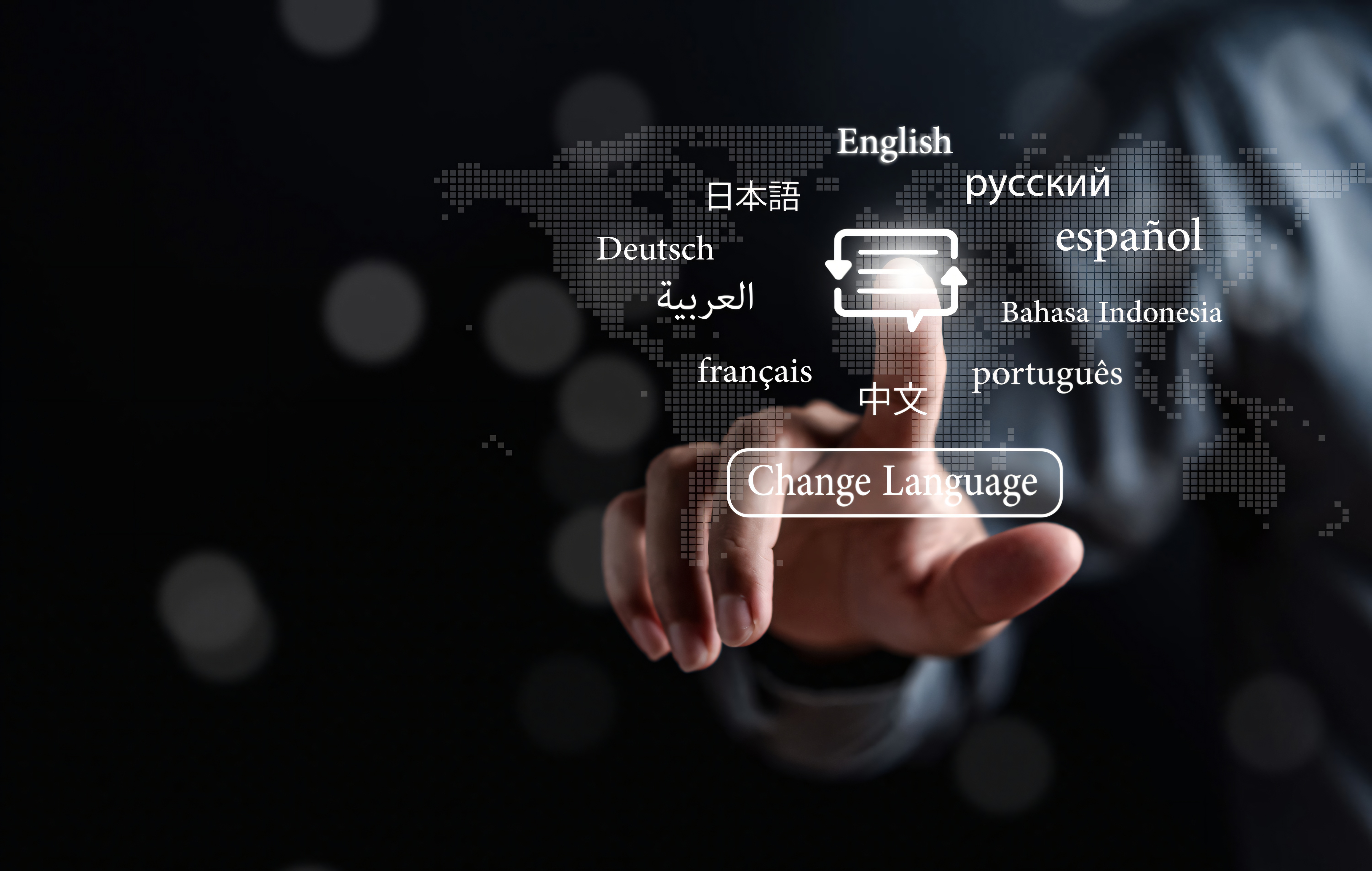
As developers of modern technology, our goal is to create products that are not just functional, but universally accessible and intuitive. In our increasingly connected world, this means building devices that can communicate clearly with users, no matter where they are or what language they speak. While creating a multilingual interface is a challenge in itself, the true test of a global-ready product lies in its ability to handle the rich diversity of the world's scripts with absolute fidelity.
This is where the conversation moves beyond simple translation to the core of text rendering: Unicode and Diacritic Support. For too long in the world of Embedded GUI Design, displaying text with accents, umlauts, and non-Latin characters has been a significant technical hurdle, often resulting in compromised, unprofessional displays showing ugly replacement characters like '?' or '□'.
We consider this unacceptable. A user’s language should be rendered with precision and respect. This is why our Sparklet graphics library was architected from the ground up with robust, 16-bit Unicode support at its core. It’s not an add-on; it's the foundation upon which we enable developers to build truly global, visually perfect Multilingual Embedded GUIs.
Why Perfect Character Rendering is Non-Negotiable
First, let's be clear about what we're discussing. ASCII, the old 7-bit character standard, was sufficient for basic English text but is completely inadequate for the world's languages. Unicode is the universal standard that assigns a unique number (a code point) to every character, symbol, and emoji from every language.
Diacritics are the glyphs added to a letter—like the accent in "résumé," the umlaut in "über," or the cedilla in "façade." These are not decorative; they are essential parts of the words and can completely change their meaning and pronunciation.
Failing to render these correctly has serious consequences:
- It Breaks Communication: Displaying "Espanol" instead of "Español" is not just a minor error; it can be confusing and makes the text harder to read.
- It Looks Unprofessional: When a user sees incorrect characters on a screen, it instantly cheapens the product and erodes trust in the brand. It signals a lack of attention to detail.
- It Limits Your Market: A product that cannot correctly display common European, Cyrillic, or other scripts is immediately disqualified from being sold in those massive markets.
In short, flawless character rendering is a baseline requirement for any modern, professional embedded product.
Use Cases: Where Unicode and Diacritics are Essential
The need for comprehensive character support is everywhere. Once you start looking, you see it in nearly every aspect of a user interface.
- European and Latin-Based Languages: This is the most immediate and common requirement for products sold in Europe and the Americas. Your GUI must be able to correctly display:French: Accents (é, è, â), cedillas (ç), German: Umlauts (ä, ö, ü), Eszett (ß), Spanish: Tildes (ñ), accents (á, í), Portuguese: Tildes (ã, õ), cedillas (ç), and many more, including Nordic languages (å, ø) and Eastern European languages (č, š, ż).
- Cyrillic and Other Scripts: For products targeting Eastern Europe and parts of Asia, you need to move beyond the Latin alphabet entirely. Languages like Russian, Ukrainian, and Bulgarian use the Cyrillic script. Without a Unicode-based system, rendering text like "Настройки" (Settings) is impossible.
- User-Generated Content: Consider a device that connects to Wi-Fi. What happens if the network name (SSID) is "François's Network"? What if a user needs to enter their name, "Müller," into a profile? If your system cannot process and display these characters correctly, it creates a frustrating and sometimes impassable barrier for the user.
- Currency and Technical Symbols: Unicode also provides a standard for symbols that are critical for a professional UI. This includes currency symbols like the Euro (€), Pound (£), and Yen (¥), as well as technical symbols like the degree sign (°) or the plus-minus sign (±).
The Sparklet Approach: Unicode at the Core, Optimized for Embedded
A 16-bit Unicode Foundation: Sparklet’s text engine is natively built on 16-bit Unicode. This means that every string, whether from our EFR translation file or generated at runtime, is handled as a sequence of Unicode code points. Our font rendering engine is designed to correctly interpret these code points, find the corresponding glyph in the font file, and render it perfectly on the screen. This includes the complex logic required for combining base characters with their diacritical marks. This "native" support ensures that there are no translation errors or character corruptions within the system.
Customization and Seamless Integration
This powerful backend system is designed to be completely transparent to the designer. You can use any standard TrueType (.ttf) or OpenType (.otf) font in your project. As long as the font file itself contains the necessary characters for the languages you want to support, our toolchain will handle the rest. This allows for complete brand and design freedom.
Furthermore, this system is fully compatible with our theming engine. You can change the color, size, or style of your text, and the Unicode rendering remains perfect. It also works seamlessly with our GUI Animations and Sparklet Animations & Transitions, ensuring that your elegantly translated text can be part of any dynamic UI effect.
Conclusion: Professionalism is Universal
In today's global market, "good enough" is no longer good enough. Delivering a product that respects the user's language by rendering it with perfect clarity and accuracy is a fundamental measure of quality. It builds trust, enhances usability, and unlocks access to international markets.
With Sparklet, we have eliminated the technical barriers and performance trade-offs that have historically made this so challenging. Our combination of a native Unicode rendering engine and an intelligent "smart glyph" optimization pipeline provides a no-compromise solution. You can now build sophisticated, beautiful, and truly Multilingual Embedded GUIs that are as lightweight and performant as they are globally accessible. Ready to build an interface that speaks to the world? We invite you to explore our documentation and see how Sparklet can help you deliver a flawless user experience in any language.
https://sparkletui.com/flint-ui-designer