
In today's connected world, end-users expect a rich, responsive, and intuitive graphical user interface (GUI) on every device, from industrial control panels to smart thermostats and medical monitors. For embedded developers, delivering this smartphone-like experience on resource-constrained systems is a monumental challenge. This is precisely where the synergy between NXP’s powerful processors and an optimized graphics library becomes critical.
NXP MCUs and MPUs, particularly the versatile i.MX and LPC series, are industry workhorses, powering millions of devices that require a balance of performance, low power, and connectivity. However, unlocking their full graphics potential requires a software layer that is both powerful and efficient.
Enter Sparklet, an advanced embedded graphics library built from the ground up for high-performance and resource-efficient embedded GUI design. This post explores how Sparklet provides a high-performance GUI framework that specifically leverages the hardware capabilities of NXP platforms, enabling developers to build stunning, fluid UIs without compromising system performance or battery life.
Sparklet Compatibility with NXP Platforms
One of Sparklet's core design principles is deep, seamless integration with the hardware it runs on. Sparklet provides comprehensive support across the entire NXP portfolio, from high-performance MPUs to ultra-low-power MCUs.
This includes full optimization for:
- MPU-class (Application Processors): NXP i.MX 6, i.MX 7, i.MX 8, and the latest i.MX 9 series.
- MCU-class (Crossover & Microcontrollers): NXP i.MX RT, Kinetis, and the LPC series.
Sparklet isn't just ported to these platforms; it's architected to exploit their specific features.
- For MPU-class devices like the i.MX 8M Plus, Sparklet leverages the powerful multi-core ARM architecture (e.g., Cortex-A53) and the 3D/2D Graphics Processing Units (GPUs) for complex scene rendering, high-resolution animations, and multi-display support, often running on top of Linux or a real-time operating system (RTOS).
- For MCU-class devices like the i.MX RT1170 or LPC5500 series, Sparklet’s magic lies in its efficiency. It is optimized to work with NXP's dedicated 2D graphics accelerators, such as the PXP (Pixel Processing Pipeline) and VGLite, offloading tasks like color-space conversion, scaling, and blending from the CPU.
- On an i.MX RT device, it automatically utilizes VGLite or the PXP for graphics operations. This means the CPU (e.g., Cortex-M7) is almost entirely free to run your core application logic—like monitoring a sensor or managing a motor—even while the UI is smoothly animating.
- On a high-end i.MX 9 MPU, Sparklet offloads complex 2D and 3D rendering to the powerful GPU, enabling multi-layer compositing, translucent effects, and high-framerate video playback seamlessly integrated into the UI.
- Drastically Improved Performance and Responsiveness: By moving graphics processing from the CPU to dedicated hardware accelerators, the UI becomes incredibly fluid. Touch inputs feel instant, and animations are smooth, delighting end-users and making the product feel high-quality.
- Minimal CPU Load and Power Efficiency: Freeing the CPU is a massive win. It means your application has more processing headroom, or you can run the CPU at a lower clock speed, significantly reducing power consumption—a critical factor for battery-powered devices.
- True Cross-Platform Flexibility: This is a major accelerator for product families. You can design your GUI assets and logic once using Sparklet and deploy them across your entire NXP portfolio. The same UI can power a low-cost LPC-based device and a high-end i.MX 9-based system, with Sparklet automatically scaling the performance to match the hardware.
- Ease of Integration: Sparklet is designed to slot directly into existing NXP workflows. With pre-packaged support for the MCUXpresso toolchain and ready-to-run examples for popular NXP EVKs, developer onboarding is fast and frictionless.
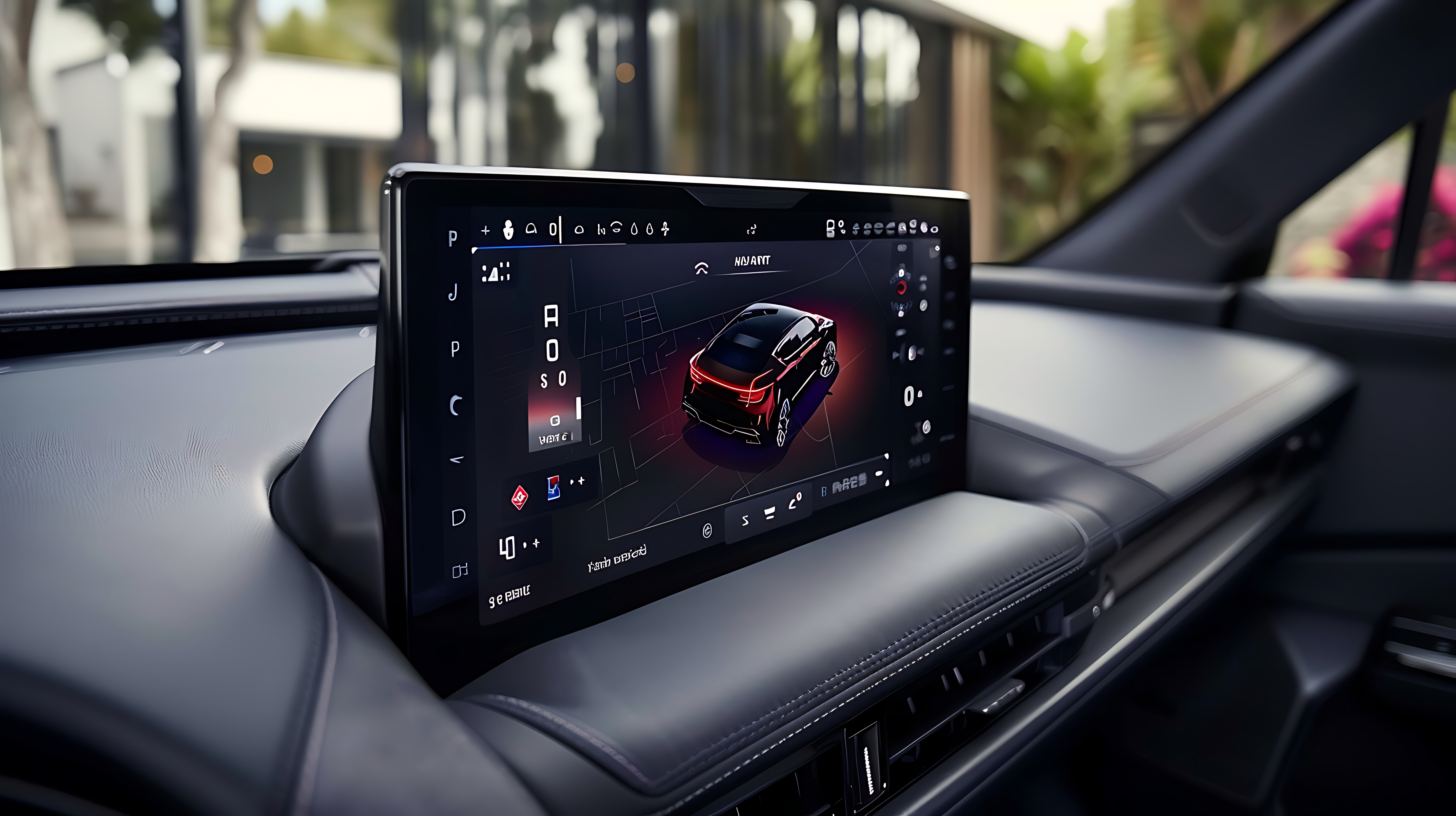
- Automotive: On i.MX 8 and i.MX 9 platforms, Sparklet powers responsive infotainment systems and vibrant digital clusters. Its efficient rendering engine can handle dynamic 2D and 3D elements, crucial for turn-by-turn navigation and vehicle status visualization, all while meeting fast-boot requirements.
- Industrial: For embedded HMI development, Sparklet on the i.MX RT series is a game-changer. It can drive high-resolution control panels and monitoring displays, rendering complex real-time charts and data visualizations with clarity and zero lag, ensuring operators have the critical information they need, when they need it.
- Medical: In handheld diagnostic tools or patient monitors based on the low-power i.MX RT or LPC series, Sparklet's efficiency is paramount. It delivers crisp, highly-readable text and graphics on smaller displays while consuming minimal power, extending battery life for portable equipment where reliability is life-critical.
- Consumer: From smart appliances like ovens and refrigerators to wearables, Sparklet enables a high-end feel on cost-effective hardware. It allows designers to implement the beautiful, animated UIs that consumers now demand, transforming a simple appliance into a premium smart device.
This broad compatibility is streamlined for developers through tight integration with NXP's development ecosystem, including the MCUXpresso SDK and standard Board Support Packages (BSPs). This means you can get Sparklet up and running on an NXP Evaluation Kit (EVK) in minutes, not weeks.
Performance and Optimization
The term "high-performance" is often used, but with Sparklet on NXP hardware, it translates to tangible results. This embedded graphics performance is achieved through a multi-layered optimization strategy.
Hardware Acceleration is Key
Sparklet’s rendering pipeline is intelligent. It analyzes the UI scene and delegates rendering tasks to the most efficient hardware block available.
Low Memory Footprint
Many resource-constrained systems, especially those based on the LPC or lower-end i.MX RT series, have stringent RAM and Flash limitations. Sparklet is engineered for this reality. It features an exceptionally low memory footprint, with a minimal kernel and the ability to run from internal flash. It employs smart strategies like partial frame buffering, on-the-fly asset decompression, and efficient memory management to deliver rich graphics without requiring expensive external SDRAM.
Real-time Rendering
For embedded HMI development, especially in industrial or medical fields, real-time rendering is non-negotiable. Sparklet’s core engine is written in highly optimized C/C++ to ensure deterministic performance and minimal latency. This results in fluid, 60 FPS animations, immediate touch response, and a GUI that never "stutters," even when the main system is under heavy load.
Key Benefits of Using Sparklet on NXP MCUs and MPUs
Adopting Sparklet for your NXP i.MX and LPC series project provides four fundamental advantages:
Use Cases and Applications
Sparklet's scalability makes it the ideal choice for a vast range of applications built on NXP MCUs and MPUs.
Customization and Scalability
A high-performance GUI framework must also be flexible. Sparklet provides a powerful, modular architecture that gives developers full control.
It features a rich library of built-in widgets (buttons, sliders, graphs, etc.) that are fully customizable. Developers can easily create their own custom widgets, script complex animation logic, and manage intricate UI states. The layer-based design, similar to modern desktop design tools, makes it simple to compose complex screens, manage pop-ups, and blend elements.
Most importantly, this entire feature set is scalable. You don't need a high-end MPU to get advanced features. Sparklet’s architecture allows you to selectively enable features, ensuring the library remains lean and efficient, running comfortably even on an LPC microcontroller with limited Flash and RAM.
Future-Ready Embedded Graphics
The world of embedded systems moves quickly. NXP continuously releases new SoCs with more powerful cores and advanced graphics capabilities. Sparklet is designed to grow with this evolution. Its architecture is adaptable, allowing for immediate support of new hardware accelerators as they become available.
By choosing the Sparklet graphics library, you are not just solving today's embedded graphics performance challenges; you are future-proofing your product. You are empowering your team to design the modern, intuitive, and efficient GUIs that will elevate your user experience and set your product apart from the competition for years to come.
Conclusion
Delivering a fluid, high-quality GUI on NXP MCUs and MPUs no longer requires a compromise between performance, features, and system resources. Sparklet provides a comprehensive, hardware-accelerated solution that scales perfectly across the entire NXP i.MX and LPC series. It minimizes CPU load, reduces power consumption, and dramatically accelerates your development timeline.
Don't let your UI be an afterthought. Make it your product's greatest strength. Ready to see the difference Sparklet can make on your NXP hardware? Explore our Supported Platforms documentation for detailed information on your specific NXP target. Request a demo today to evaluate Sparklet's performance and see how our high-performance GUI framework can transform your next embedded project.
https://sparkletui.com/documentation/